
Ozone-Compatible Materials: A Field Guide
Ozone attacks many common materials. Most early failures we see in ozone systems start with a seal, valve or fitting that was fine for water but not for ozone. This guide sums up what we use and what we avoid, from our work on WEDECO, Ozonia and Trailigaz systems.
Ozone gas lines
From the generator to the injector and the destruct unit.
Usually suitable:
- 316L stainless steel, for dry, clean gas. Moisture in the line can form acid, so keep the gas dry.
- PTFE, PFA and FEP.
- Glass, quartz and ceramics, where the part allows it.
Seals and valves: PTFE, or an FFKM grade confirmed for ozone. Use EPDM or FKM only with the manufacturer's approval.
Avoid: natural rubber, NBR (Buna-N), mild steel and zinc.
Ozonated water
On the water side, the water chemistry matters as much as the ozone level.
Usually suitable: 316L stainless steel (check chloride, pH and corrosion), PTFE and PVDF.
Check the grade: PVC and CPVC only where rated for the service. EPDM and FKM seals: confirm the formulation and duty.
Watch out: a material rated for ozonated water is not automatically safe for ozone gas. Where gas can collect, such as pockets, degassing vessels or off-gas lines, use materials rated for gas.
Fittings
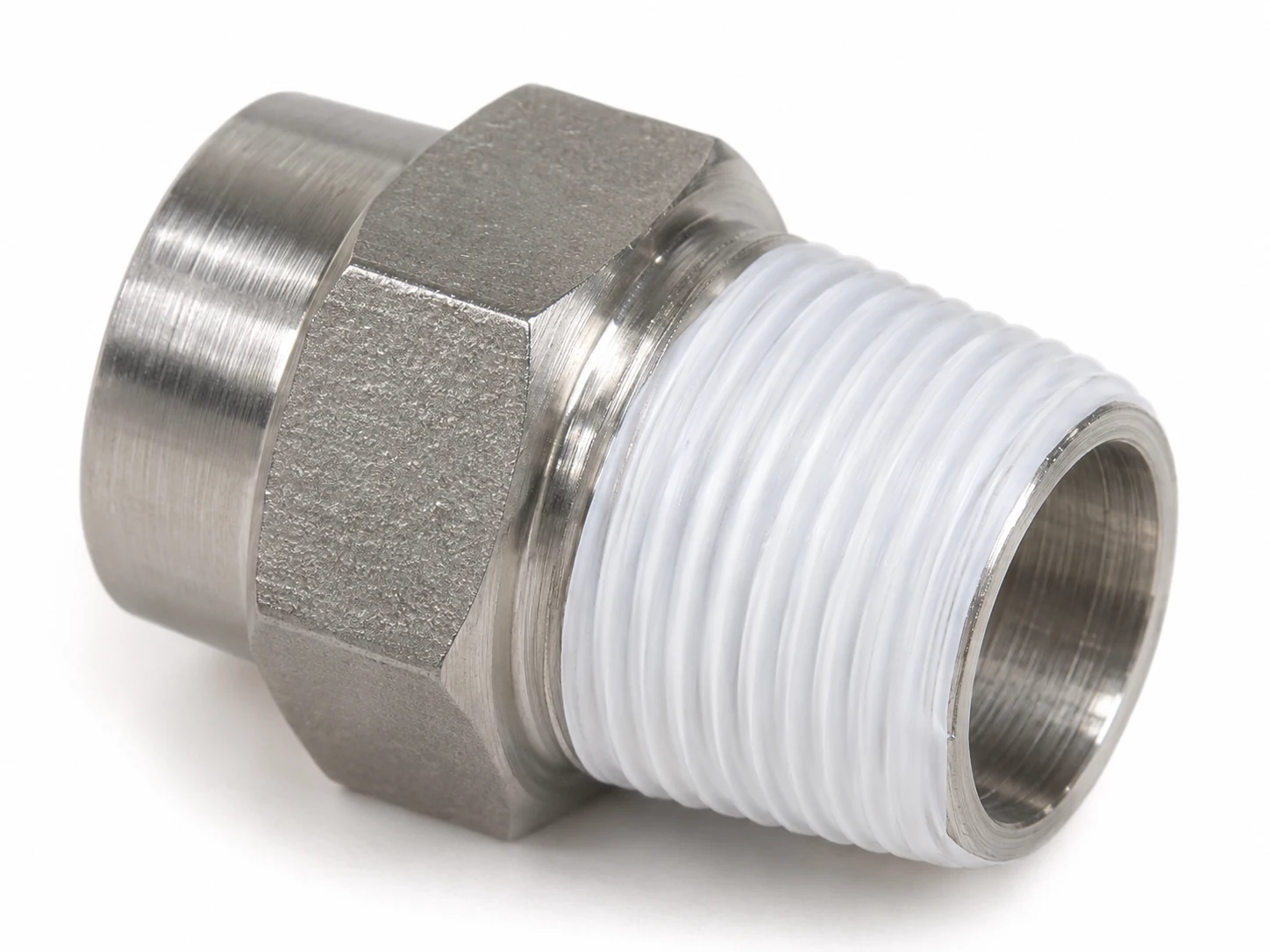
Tapered threads: PTFE tape on male tapered threads, only where specified. Keep the tape out of the bore.
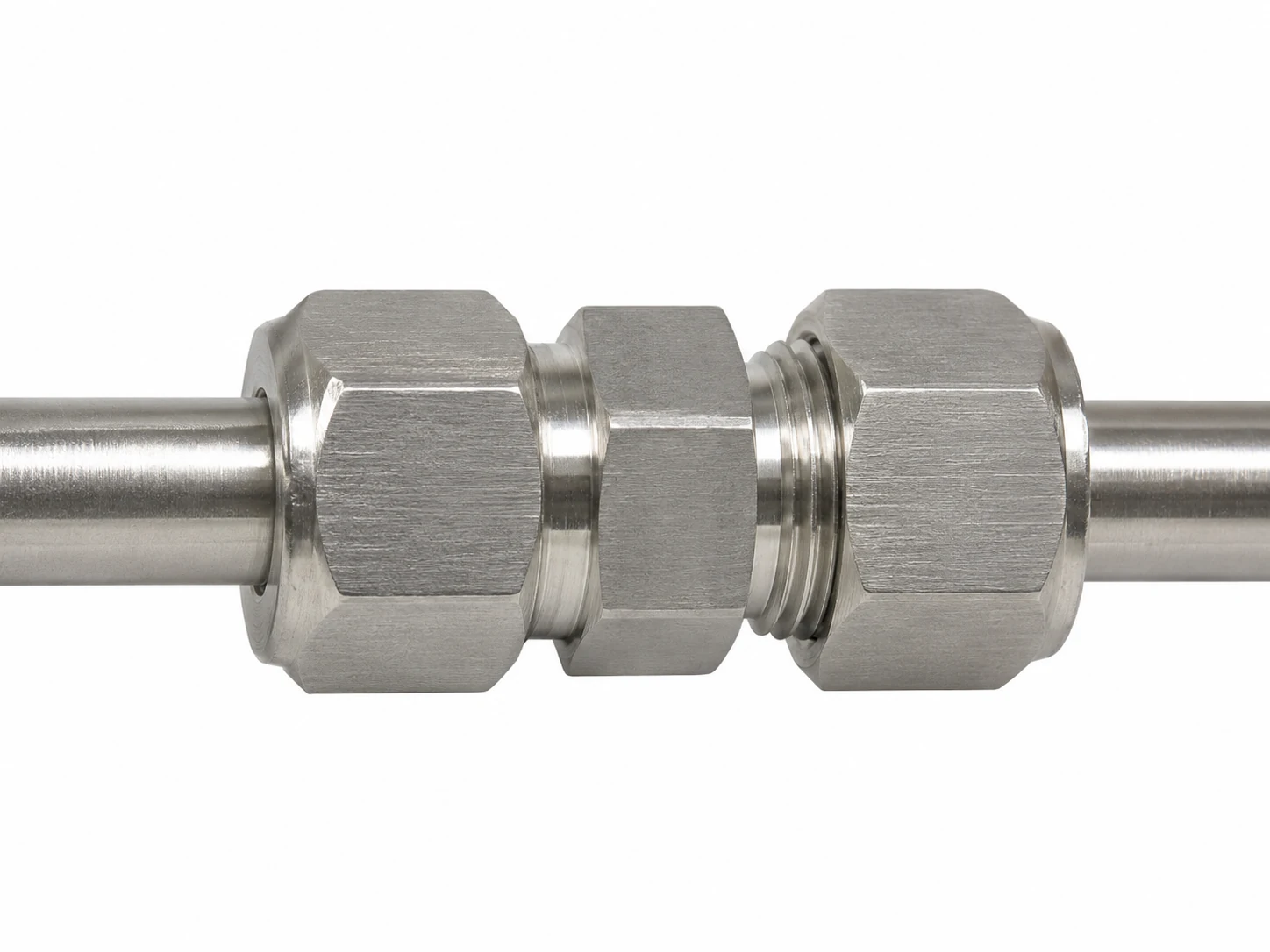
Compression fittings: No tape on ferrules, tube ends or sealing faces. Follow the fitting maker's instructions.
Before start-up
- Confirm whether the line carries gas, water or both.
- Check the ozone level, moisture, pressure, temperature and water chemistry.
- Make sure oxygen and ozone parts are free of oil and grease.
- Leak test or pressure test before any ozone goes in.
This is a quick reference. Final selection must follow the component manufacturer's instructions and your site specification.
Not sure what to use?
Send us the service, operating conditions and equipment, and we'll help you choose.
Ask our engineers